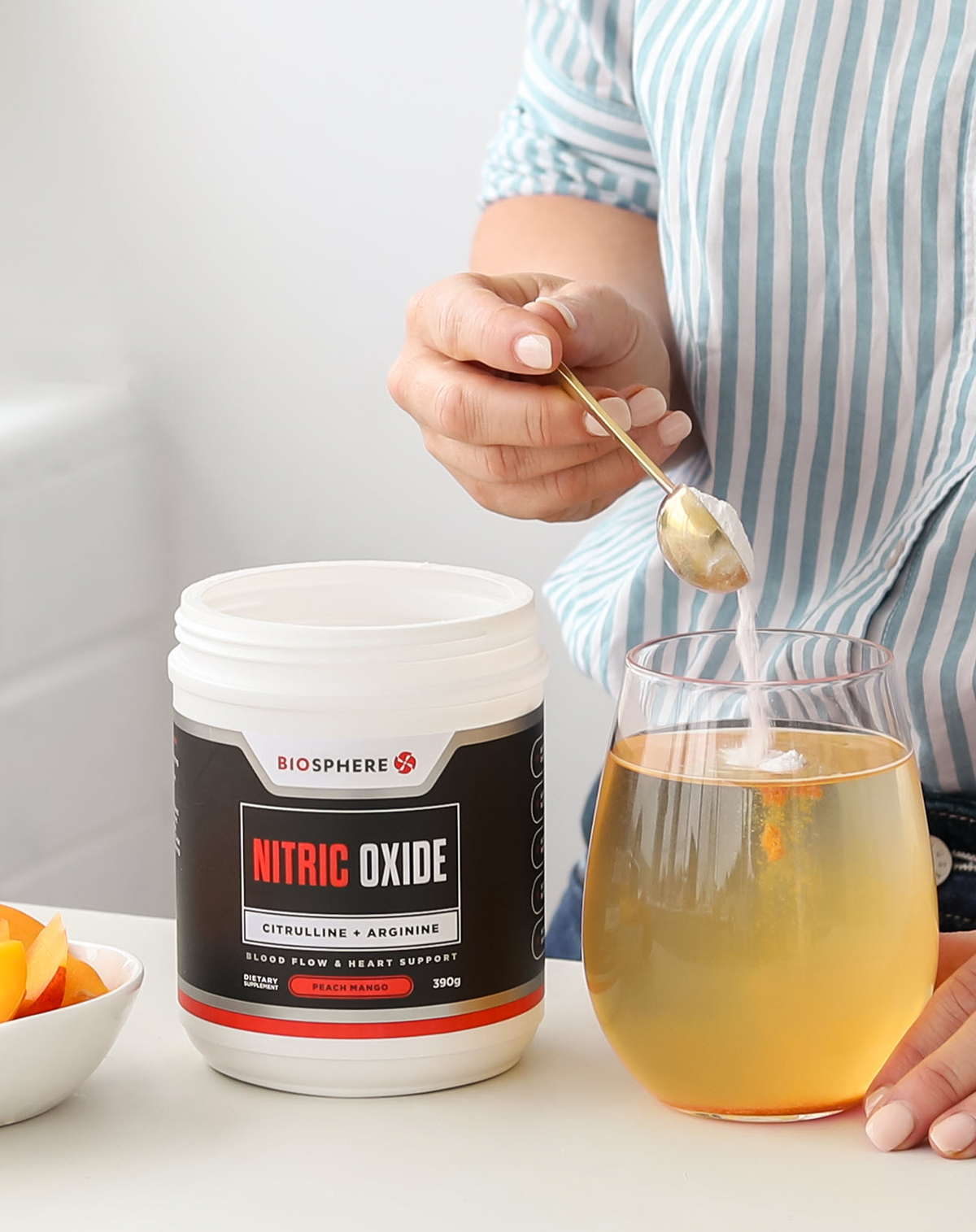
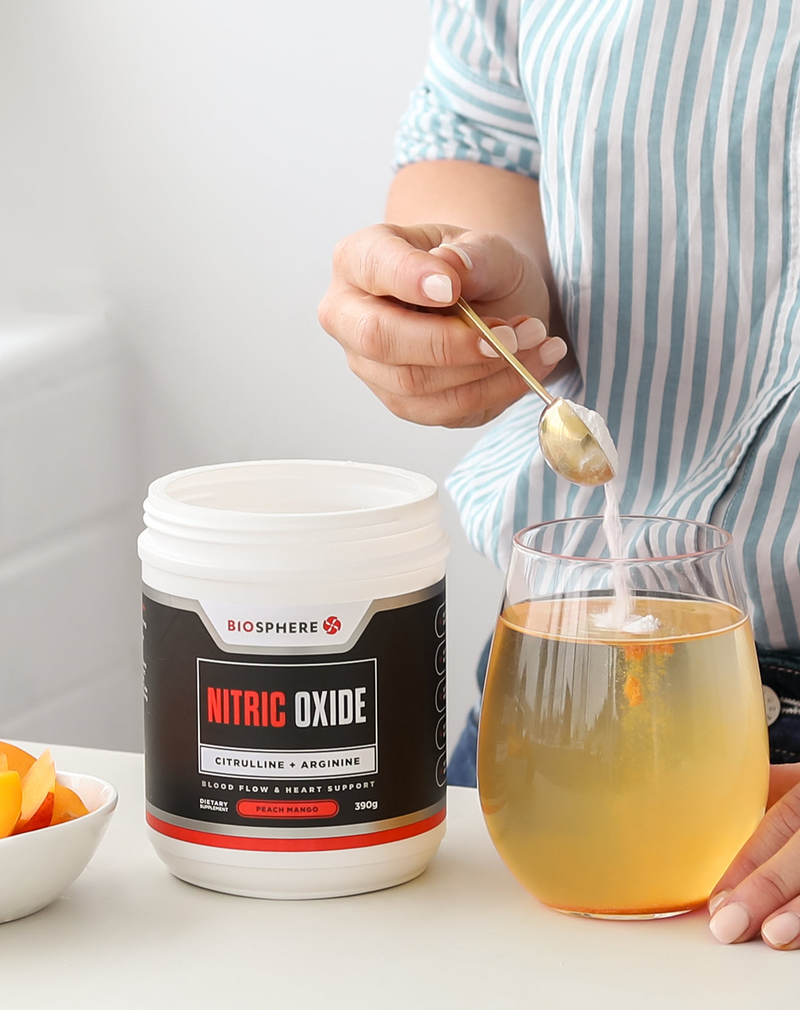
Something has shifted in the last few years. It's not what you think it is.
A piece on why your hands are colder, your stairs are higher, and your afternoons are heavier than they used to be. And the one molecule that connects all of it.

A quiet morning. The kind where you notice things you didn't used to notice.
It started small. The stairs felt a little harder one morning. You put it down to a bad sleep. Your hands got cold at dinner and didn't warm up until bed. The afternoon energy that used to carry you to seven now collapses at three.
None of it is dramatic. You're not sick. You feel mostly fine. The doctor says everything's within range. Your bloodwork is normal. You walk, you eat reasonably well, you take your vitamins.
But you don't feel like yourself.
You feel like a version of yourself that's running on slightly less of something. You can't name what. And you've started to suspect that no amount of green smoothies or extra sleep is going to bring it back.
This is a piece about what that something is.
THE THING NOBODY MENTIONED
There's one underlying mechanism that explains most of it.
It has nothing to do with how much sleep you're getting, how much water you're drinking, or whether you remembered your multivitamin this morning.
It's a molecule. Your body has been making less of it every year of your adult life. By the time you reach your 50s, production can be around half of what it was at 25.
It's called nitric oxide. And you've almost certainly never heard your GP mention it.
WHAT THE MOLECULE DOES
It controls how much blood reaches every part of you.
The inside of your blood vessels produces nitric oxide minute by minute, in response to what your body is doing. Its job is simple: tell the vessels to relax and widen so blood moves through with less resistance.
When there's enough of it, blood reaches every part of you. Your fingertips. Your scalp. The part of your brain that needs to focus through a 4pm meeting. The muscles you just asked to walk up a flight of stairs.
When there isn't, blood flow slows. The first places to feel it are the ones furthest from your heart, and the ones that need oxygen most.

The first place you notice it is somewhere you used to not notice anything at all.
WHY YOU FEEL THE WAY YOU FEEL
Four small things you've started to notice. One mechanism behind all of them.
If you recognise yourself in any of these, you're not imagining it. You're noticing real changes that come from the same place.

Cold hands and feet that stay cold.
PERIPHERAL CIRCULATION
The vessels furthest from your heart are the first to feel reduced flow. Even in a warm room, after a warm drink, your fingers and toes don't warm up the way they used to.

The afternoon fog that won't lift.
CEREBRAL CIRCULATION
Your brain runs on roughly 20% of your body's oxygen. When circulation slows, focus and mental clarity are among the first things to soften. The hours between two and five are when most people notice it most.

Stairs that feel higher than they used to.
VESSEL STIFFNESS
Your heart is doing the same work it always did, but against vessels that have lost some of their flexibility. More effort for the same flight. Out of breath at the top where you didn't used to be.

Recovery that takes longer.
MUSCLE OXYGEN DELIVERY
A long walk, an afternoon in the garden, a flight of stairs with shopping bags. The recovery between any of these used to be fast. Now it lingers. Your muscles need oxygen to refresh, and oxygen needs blood to arrive.

THE SCIENCE IS SETTLED
In 1998, the Nobel Prize in Physiology or Medicine was awarded for discoveries about nitric oxide and how it controls the cardiovascular system.
The discovery applies to every vessel in your body, not just the ones around your heart. Decades of research since then have identified the building blocks your body uses to produce it, and what changes when you give them at the right doses.
The Nobel committee called nitric oxide "a completely new principle for signalling in biological systems."
WHAT CHANGES WHEN YOU GIVE IT THE INPUTS
Most of this isn't a fix. It's a return.
You stop noticing the cold hands at dinner because they're not cold anymore. You stop bracing yourself before the stairs because the stairs don't feel like stairs. The 3pm slump becomes 3pm, just another point in the day.
Nothing about you has been replaced. You're not running on a stimulant. You're not relying on a hormone. You've given your body the raw materials it used to produce on its own, and your circulatory system has done the rest of the work.
This is what we built for it.

BIOSPHERE NITRIC OXIDE
The inputs your body stopped making enough of. Back in the system.
Two minutes a day. The rest is your body's work.

ONE MORE THING WORTH KNOWING.
The same molecule supports healthy blood pressure.
If someone in your life is managing high blood pressure, this is worth a mention. The nitric oxide that controls oxygen reaching your hands and your brain also controls how easily blood moves through your vessels. When NO production is supported, vessels relax. When vessels relax, the heart works against less resistance.
The research on L-citrulline as a vasodilator has been building for over a decade. If they're on prescribed medication, a quick word with their GP first is always the right call.
Two scoops a day. Same routine. A second reason to take it.
WHAT THIS LOOKS LIKE IN PRACTICE
Most cardiovascular changes happen quietly.
There's no dramatic moment. There's just a slow accumulation of small differences, until one day you realise the things that used to bother you have stopped bothering you.
Week 01
Nothing dramatic. You're mixing it morning and evening. The ingredients are getting to work before you can feel them.
Week 03
Something feels different. Your hands are warmer through the day. The afternoon dip isn't as deep. You make it through the supermarket without needing to sit.
Week 06
You realise you haven't thought about the 3pm slump in days. The flight of stairs at the office doesn't make you pause at the top. Your energy holds steadier through the afternoon.
Week 12
You feel like yourself again. Not the version at 25. The version from a few years ago. Before things started to slow down. The version that didn't have to think about any of this.
This isn't a guarantee of any specific outcome for any specific person. Bodies vary. Starting points vary. But this is the typical arc of what consistent twice-daily use looks like across a tub and a half.

Week twelve. The point where you stop noticing the things you'd started to notice.
Clinical doses cost more. Here's what you'd pay buying them separately.
Most circulation supplements use trace amounts of one or two ingredients and rely on marketing to fill the gap. Sourcing all six at the doses research actually uses isn't cheap. Here's what those numbers look like.
Six ingredients at clinical doses. One bottle each.
All six in one scoop. Twice daily. One tub.
- Six ingredients, full clinical doses
- USA-sourced, FDA-regulated manufacturing
- Third-party tested every batch
- 60 servings, 30 days at twice-daily use
- Naturally flavoured peach mango
- One ritual, twice a day
The strongest signal a supplement is doing something isn't a review.
It's a reorder.
72%
of Biosphere Nitric Oxide customers reorder within 90 days. People don't reorder a twice-daily product unless they're feeling the difference.
Customer Reviews
Overall rating: 4.8 / 5 from 1630 reviews.

Astaxanthin is vital for us all in this aging process. Every blessing we can get for all round health and optimal function is a bonus. We are grateful for the bioavailable source. Regards Steve and Fiona

I have tried many supplements over the years. Some I’ve stopped using because I didn’t notice a difference. I Will always aim to keep astaxanthin as part of my stack. I have noticed such an amazing change in my skin. My skin has always been good, but this has taken it to another level. I love this product! I particularly love the Biosphere brand as they use olive oil in the capsules, rather than seed oils. Really happy to support this NZ company.

Great product, I have been using it to help my eyes feel more comfortable ( post menopause) , they are definitely less scratchy than they were! I can’t wait to try the magnesium yet, it looks really good.

We both have the best sleep usimg this product. I am about to put in another order.

Lovely flavour and works really well.

I rely on 'Sleep' to help my sleep. Its a vial part of my evening ritual. I notice when I dont take it

Great for dry eyes. Best I've tried

Take this every night for restless legs and sleep . Alternate between the 2 flavours

Very good product but I did have to adapt it. I found taking it just before bed it would give me a hit of energy. So I no take it with dinner or just after around 7 and it gives my body time to process the ashwaganda. I still do have trouble sleeping but I do feel the nights I do sleep it’s a deeper sleep. I am going through a lot of stress and biological changes but I do feel it has helped just not as much as I hoped. The flavour is delicious and the customer service was awesome. I’m going to try the plain magnesium next time as I think ashwagandha not well suited to me

Great product - slept soundly :)

Really like the Biosphere Magnesium. It's so helpful before and after hard physical work when I tend to get plagued with cramp. Alongside other salts & good hydration it's been great .Also very pleasant to drink. My wife also likes to use it at night for restless legs & to help relax. 😊

I have systemic health issues and this is great for sleep, nerves and digestion (in a slow moving system). Great combination of types of magnesium. Easy to mix and take.

Great product. I take it every morning 🙂

Having parkinsons disease, exercise is very much my medication but has consequences the magnesium helps with the cramps and sleep quality which makes tomorrow better.

Love this product, after my first month I have far more mobility, energy and stamina, will be purchasing more...

I haven't gotten my very first bottle yet, but I will be ordering more. Capsules are easy to swallow, and makes it easy that need to take with food . Easy to remember with breakfast

It’s one of those things that you don’t you don’t know what you’ve got ‘til it’s gone! I was sleeping well and didn’t notice my gym recovery was good until I ran out of magnesium! Without it, my sleep is terrible and I’m sore for days after working out. Ordering more now!

On my second month of astaxanthin, not much change except a little more energy generally. Will give it a full three months.

I am so happy with my Astaxanthin . Can’t believe that it has worked so quick at pain relief . I have tried lots of other products in many years and I think this is the best thing I have tried . I have no pain and it so good . I hope this keeps up I have arthritis and and a few joint replacements so always in pain . Thank you

Awesome flavour magnesium for a massive day in the mountains!!!

Both flavours are nice and the powder mixes well. No longer getting night time cramps, so very happy with this. Will definitely be continuing with this product.

Awesome product.

I've been taking Biosphere Nitric Oxide for just over 5 weeks now. Before I started my blood pressure was in the 140s/150s/ 90s. This month I have only had one spike and my daily readings are consistently lower with some now in the ideal or normal range. I am really pleased with this result so far.

Ive been taking these now for a little over a month an just love the way my skin feels, an how its helped me not getting any flu this winter . As a shift worker doing 12 hr shifts I think its really been a great help getting me thru the day. I highly recommend them.

This magnesium is almost magic, I have had hip pain for several years and 5 weeks in it had totally gone. Unfortunately its a little hard on my stomach so have had to cut down the dose to half, I can just feel my hip pain a little again with the half dose. I will try supplementing the half dose with Astaxanthin next order.

I was getting regular muscle cramps at night and in the 30 days I trialled Biosphere Magnesium I only got a cramp once or twice. Since then I tried another brand of magnesium but haven't had the same success. Mixes easily and the lemon-lime flavour I tried us pleasant to drink.

I’ve been taking Bio sphere Nitric Oxide for a couple of years now as part of my supplement protocols. I workout at the gym and also do a lot of breathwork and this compliments everything I do.

It tastes good, easy to use, and I've halved my blood pressure tablet. It seems to be working for me and I intend to remove the blood pressure tablet totally in a week or so. It's coming on holiday with me!

Take it with my morning decaf that has coconut milk - so I am taking 2 capsules with some fats. Recently had people commenting on how nice my skin is looking. I am 60yo and recovering from cancer treatment.

Really happy with the magnesium powder, mixes well, tastes great and is now part of my daily routine.

Perfect start to my day…great flavour and definitely an improvement showing in my blood pressure levels!

The lemon/lime Magnesium powder is delicious and refreshing. It certainly is helping reduce cramps and helps me get to sleep quickly and sleep for longer periods.

I take magnesium after the gym to help with cramp.

Onto my first jar and already have a back up ready to go. Tastes delicious . Even bought a new bottle to use .

My husband is slowly reducing his blood pressure medication by using Nitric Oxide. Blood pressure is finally reducing

Been taking Astaxanthin for about 6 weeks now and definitely notice my eye and skin health is better, also seem to have a bit more energy.

A nightly routine, super power sleep when I take the magnesium - such a distinctly better sleep than nights I don’t take it.

I’ve recently changed to Biosphere Magnesium and will be reordering. It is so easy to take and adjust the amount as needed. I particularly like the Mango Pineapple flavour and take it just before bed to stop leg cramps.

Great product

I have this in the morning. Great tasting and refreshing. Great start to the day
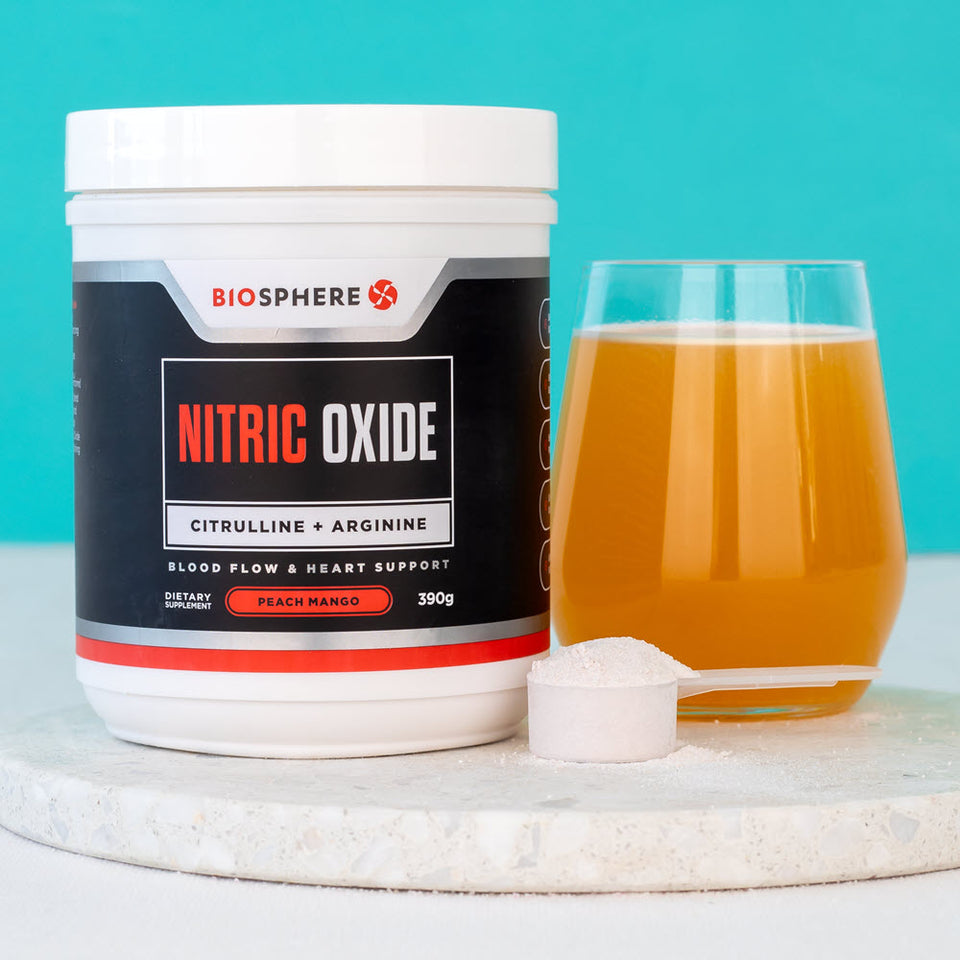
Biosphere Nitric Oxide
Less than $2.40 per day. NZD.
- Six clinically dosed ingredients to support nitric oxide production
- USA-sourced raw materials. GMP-certified, FDA-regulated facility. Third-party tested every batch.
- Naturally flavoured peach mango. No fillers, no artificial sweeteners.
- Designed for cardiovascular support.
 60-day money-back guarantee
Next-day Auckland dispatch
60-day money-back guarantee
Next-day Auckland dispatch
The only risk is not trying it.
Take it for 60 days. Morning and night, as directed. If you're not feeling warmer, sharper, or more like yourself, we refund every dollar. No questions. No hoops.
You keep the tub either way. Whether you finish it and order another, or finish it and ask for a refund, the tub is yours. We're not in the business of asking customers to repackage a half-empty supplement and ship it back. If the formula isn't doing what we say it does, that's on us, not on you.

Questions worth asking before you start.
How fast will I notice a difference?
Most people notice steadier energy and warmer hands and feet within 2 to 4 weeks of consistent use. Changes in circulation, recovery, and stamina typically build over 4 to 8 weeks. It works best when taken every day, before meals, both morning and evening.
Why two doses a day?
Nitric oxide doesn't stay in your body for long. One large daily dose creates a brief spike followed by hours of low levels. Two smaller doses, morning and evening, support steadier nitric oxide availability throughout the day. That's the level of support your circulation actually benefits from.
Is it safe to take long-term?
Yes. The ingredients are non-habit forming and well-researched for daily use. 72% of our customers reorder within 90 days, which suggests they're comfortable taking it as part of their ongoing routine.
Can I take this with my medication?
If you're on any prescribed medication, especially for blood pressure or heart conditions, please consult your GP before adding any supplement. Many customers use Biosphere Nitric Oxide alongside their medications with medical supervision, but a quick conversation with your doctor first is always the right call.
How does it taste?
Naturally flavoured peach mango, sweetened with stevia. No artificial sweeteners, no synthetic flavours. Most customers describe it as pleasant enough to look forward to as a daily ritual.
Where does this ship from?
All Biosphere orders ship from our Auckland warehouse. Most orders dispatched the next business day, with delivery to most parts of New Zealand within 1 to 3 working days.
Everything you need. Nothing you don't.
- 1 tub of Biosphere Nitric Oxide · 60 servings (30 days at twice-daily dosing)
- 20% off your first order, no code needed
- Next-day Auckland dispatch on every order
- 60-day money-back guarantee, no questions asked