

Astaxanthin is vital for us all in this aging process. Every blessing we can get for all round health and optimal function is a bonus. We are grateful for the bioavailable source. Regards Steve and Fiona
Every migraine
you don't get is
a day you keep.
In trials, people who took magnesium every day got fewer migraines.


 400mg elemental per scoop
 Forms your body absorbs
 Third-party tested
 GMP-certified facility

If you've had migraines for years, you've been offered things. Most of it arrives with a promise it can't keep.
The American Academy of Neurology and the American Headache Society reviewed the trial evidence and rated magnesium “probably effective” for reducing migraine attacks. It's the highest grade they've given any supplement for it.
It isn't something you take when one starts. It's taken every day, whether you feel one coming or not.
Magnesium builds up over time, which is why the trial ran a full twelve weeks, and why we'd say give it a tub before you judge it.

Magnesium isn't a painkiller and doesn't behave like one. It's involved in how nerve cells fire and how blood vessels relax, and both of those are part of what happens during a migraine.
That's why researchers looked at it in the first place. People who get migraines tend to have less magnesium stored in their cells than people who don't.
So there's a real reason behind the
trial results, not just a coincidence.

Researchers have looked at period-related migraines separately. In one trial, women taking magnesium from mid-cycle onwards had fewer headache days than the women on placebo, and their premenstrual symptoms eased alongside it.
Around three in four migraine sufferers are women, and the years either side of menopause are when a lot of women notice their migraines change.
If that sounds like you, this is the study that matters most.
What to expect
This is the part most supplements won't tell you, because the honest answer costs them the sale in week two. You don't fix low magnesium in a week. It takes time to build your levels back up, which is why one tub is the smallest fair test.
Weeks 1 to 4
Your levels are still coming up. In the trial both groups looked alike here, and this is where most people stop. It's the one thing the evidence says not to do.
Weeks 5 to 8
One scoop in water, whether or not you feel one coming. Levels build slowly rather than jumping. Your tub runs down around the end of this stretch.
Weeks 9 to 12
This is where the magnesium group started doing better than the placebo group. By the end of your first tub you'll have a real read on it.
Made in a GMP-certified facility and third-party tested, batch by batch.
How it's made
It's cheaper to use a small amount of a poorly absorbed form, print a big number on the front, and let the label do the work. That's why so many people take a magnesium for a month, feel nothing, and write off the whole category.
We use the dose the research uses. That costs more to make, and we charge more because of it.
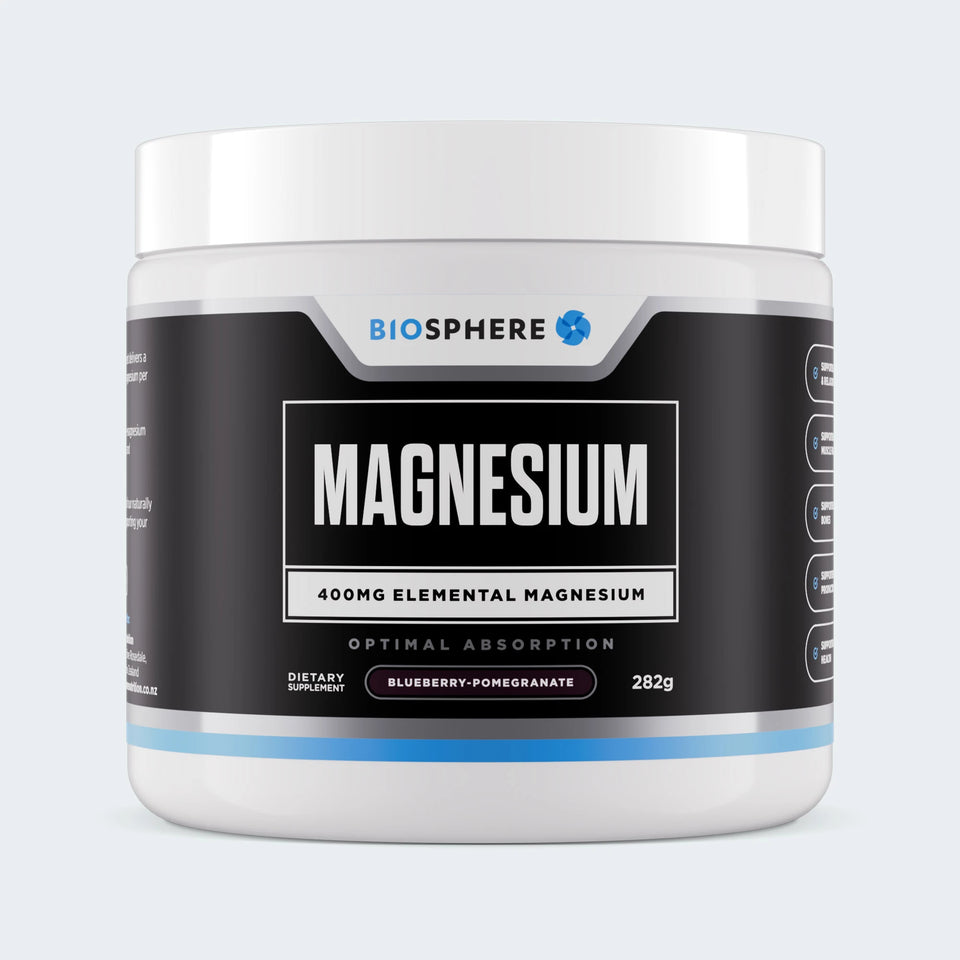
93c a serve · two months from one tub
Choose your flavour
The most reviewed magnesium in New Zealand
Available from 150+ NZ stores. Real reviews from real Biosphere customers.
Overall rating: 4.8 / 5 from 1640 reviews.
Astaxanthin is vital for us all in this aging process. Every blessing we can get for all round health and optimal function is a bonus. We are grateful for the bioavailable source. Regards Steve and Fiona

I have tried many supplements over the years. Some I’ve stopped using because I didn’t notice a difference. I Will always aim to keep astaxanthin as part of my stack. I have noticed such an amazing change in my skin. My skin has always been good, but this has taken it to another level. I love this product! I particularly love the Biosphere brand as they use olive oil in the capsules, rather than seed oils. Really happy to support this NZ company.

Great product, I have been using it to help my eyes feel more comfortable ( post menopause) , they are definitely less scratchy than they were! I can’t wait to try the magnesium yet, it looks really good.

We both have the best sleep usimg this product. I am about to put in another order.

Lovely flavour and works really well.

I rely on 'Sleep' to help my sleep. Its a vial part of my evening ritual. I notice when I dont take it

Great for dry eyes. Best I've tried

Take this every night for restless legs and sleep . Alternate between the 2 flavours

Very good product but I did have to adapt it. I found taking it just before bed it would give me a hit of energy. So I no take it with dinner or just after around 7 and it gives my body time to process the ashwaganda. I still do have trouble sleeping but I do feel the nights I do sleep it’s a deeper sleep. I am going through a lot of stress and biological changes but I do feel it has helped just not as much as I hoped. The flavour is delicious and the customer service was awesome. I’m going to try the plain magnesium next time as I think ashwagandha not well suited to me

Great product - slept soundly :)

Love it

My husband and I have both been taking Biosphere Nitric Oxide, and we’ve been really happy with how we feel since starting it. We both feel so much better overall and have noticed a real difference in our general well-being and energy. It’s now become part of our daily routine, and based on our personal experience, we’re very pleased with it. It’s not often that we find a product that we both feel has made a noticeable difference, but this one has. We’ll definitely continue taking it!

Another one bites the dust! I’m really benefiting from taking this product every evening. I’m sleeping through the night, and waking refreshed. I would recommend this to anyone as a fuss free, easily digestible form of magnesium for settling your nervous system and allowing good sleep patterns.

Really like the Biosphere Magnesium. It's so helpful before and after hard physical work when I tend to get plagued with cramp. Alongside other salts & good hydration it's been great .Also very pleasant to drink. My wife also likes to use it at night for restless legs & to help relax. 😊

I have systemic health issues and this is great for sleep, nerves and digestion (in a slow moving system). Great combination of types of magnesium. Easy to mix and take.

Great product. I take it every morning 🙂

Having parkinsons disease, exercise is very much my medication but has consequences the magnesium helps with the cramps and sleep quality which makes tomorrow better.

Love this product, after my first month I have far more mobility, energy and stamina, will be purchasing more...

I haven't gotten my very first bottle yet, but I will be ordering more. Capsules are easy to swallow, and makes it easy that need to take with food . Easy to remember with breakfast

It’s one of those things that you don’t you don’t know what you’ve got ‘til it’s gone! I was sleeping well and didn’t notice my gym recovery was good until I ran out of magnesium! Without it, my sleep is terrible and I’m sore for days after working out. Ordering more now!

On my second month of astaxanthin, not much change except a little more energy generally. Will give it a full three months.

I am so happy with my Astaxanthin . Can’t believe that it has worked so quick at pain relief . I have tried lots of other products in many years and I think this is the best thing I have tried . I have no pain and it so good . I hope this keeps up I have arthritis and and a few joint replacements so always in pain . Thank you

Awesome flavour magnesium for a massive day in the mountains!!!

Both flavours are nice and the powder mixes well. No longer getting night time cramps, so very happy with this. Will definitely be continuing with this product.

Awesome product.

I've been taking Biosphere Nitric Oxide for just over 5 weeks now. Before I started my blood pressure was in the 140s/150s/ 90s. This month I have only had one spike and my daily readings are consistently lower with some now in the ideal or normal range. I am really pleased with this result so far.

Ive been taking these now for a little over a month an just love the way my skin feels, an how its helped me not getting any flu this winter . As a shift worker doing 12 hr shifts I think its really been a great help getting me thru the day. I highly recommend them.

This magnesium is almost magic, I have had hip pain for several years and 5 weeks in it had totally gone. Unfortunately its a little hard on my stomach so have had to cut down the dose to half, I can just feel my hip pain a little again with the half dose. I will try supplementing the half dose with Astaxanthin next order.

I was getting regular muscle cramps at night and in the 30 days I trialled Biosphere Magnesium I only got a cramp once or twice. Since then I tried another brand of magnesium but haven't had the same success. Mixes easily and the lemon-lime flavour I tried us pleasant to drink.

I’ve been taking Bio sphere Nitric Oxide for a couple of years now as part of my supplement protocols. I workout at the gym and also do a lot of breathwork and this compliments everything I do.

It tastes good, easy to use, and I've halved my blood pressure tablet. It seems to be working for me and I intend to remove the blood pressure tablet totally in a week or so. It's coming on holiday with me!

Take it with my morning decaf that has coconut milk - so I am taking 2 capsules with some fats. Recently had people commenting on how nice my skin is looking. I am 60yo and recovering from cancer treatment.

Really happy with the magnesium powder, mixes well, tastes great and is now part of my daily routine.

Perfect start to my day…great flavour and definitely an improvement showing in my blood pressure levels!

The lemon/lime Magnesium powder is delicious and refreshing. It certainly is helping reduce cramps and helps me get to sleep quickly and sleep for longer periods.

I take magnesium after the gym to help with cramp.

Onto my first jar and already have a back up ready to go. Tastes delicious . Even bought a new bottle to use .

My husband is slowly reducing his blood pressure medication by using Nitric Oxide. Blood pressure is finally reducing

Been taking Astaxanthin for about 6 weeks now and definitely notice my eye and skin health is better, also seem to have a bit more energy.

A nightly routine, super power sleep when I take the magnesium - such a distinctly better sleep than nights I don’t take it.
Take it every day for the full tub. If your migraines are exactly where they were, email us and we'll refund you.
The questions worth asking
Give it the full tub, which is about two months of daily use.
In the trial, magnesium and placebo still looked similar after the first month, and the gap opened up in the final stretch. A quiet first month isn't a sign it's failed. If you finish the tub and nothing has shifted, that's a real answer and the guarantee covers you.
Check with your GP or pharmacist first. Magnesium can interfere with the absorption of some medications, including certain antibiotics and bone medications, which is usually handled by spacing the doses a few hours apart.
Don't stop or change anything you've been prescribed. This sits alongside what you're already doing, not in place of it. If you have reduced kidney function, check before starting.
Whichever one you'll actually stick to. There's no trial evidence that timing changes the outcome for migraine, and consistency over two months matters far more than the hour.
Take it within an hour of a meal, so there's some food digesting when you have it.
Tell us and we'll refund you. You have 60 days, which covers the tub.
Magnesium works for some people and not others, and there's no way to know which one you are without trying it. We'd rather refund you than have you believe we promised something the research doesn't support.
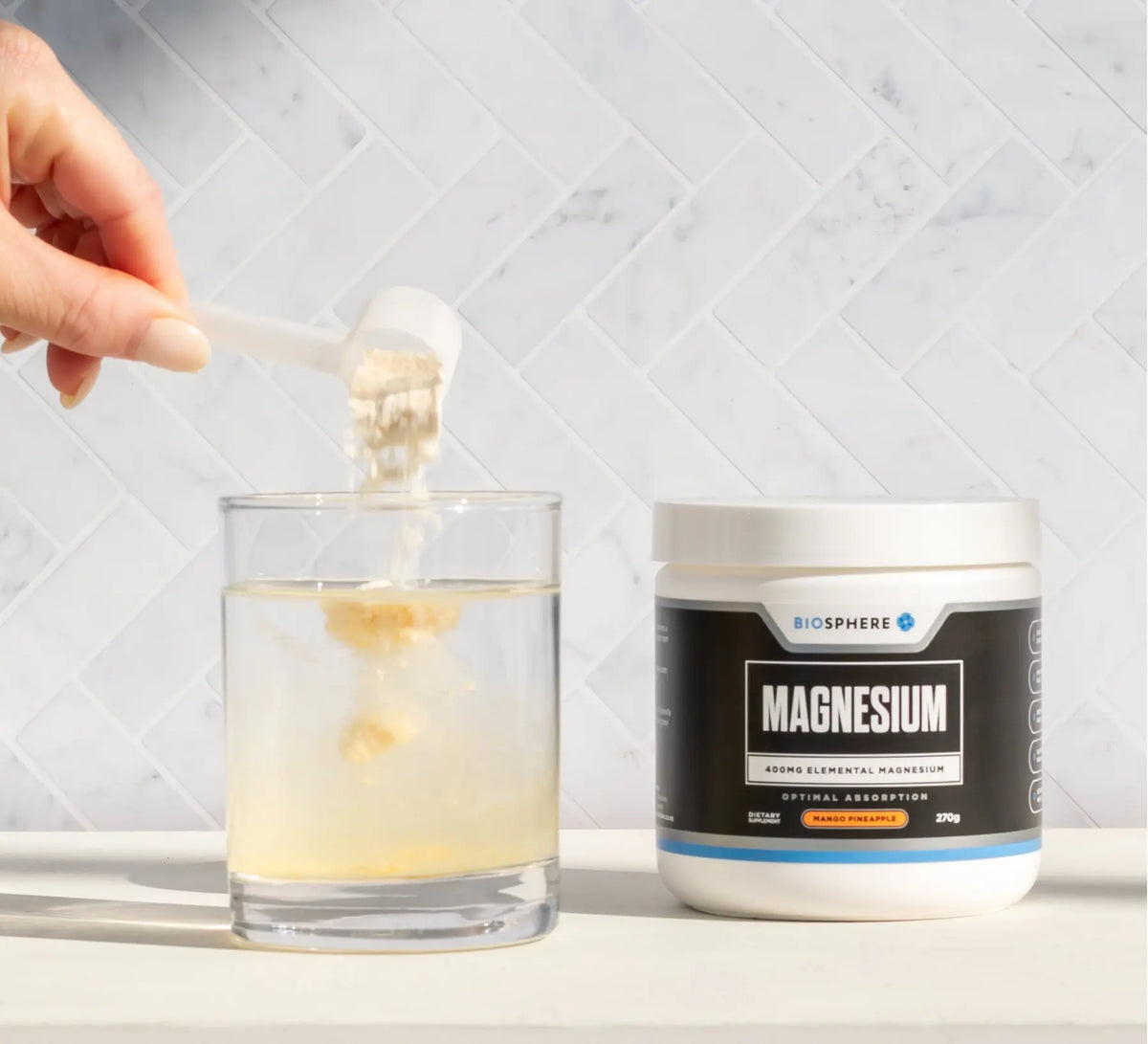
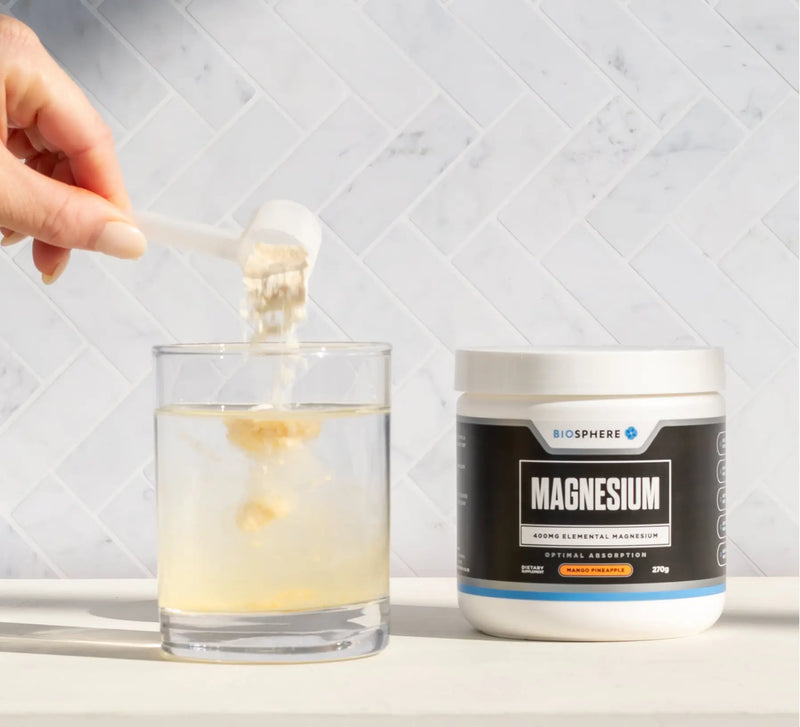
If you're getting fewer migraines, keep going. If nothing has changed, tell us and we'll refund you. That's the whole deal.
60-day money-back guarantee · Next-day Auckland dispatch